
-
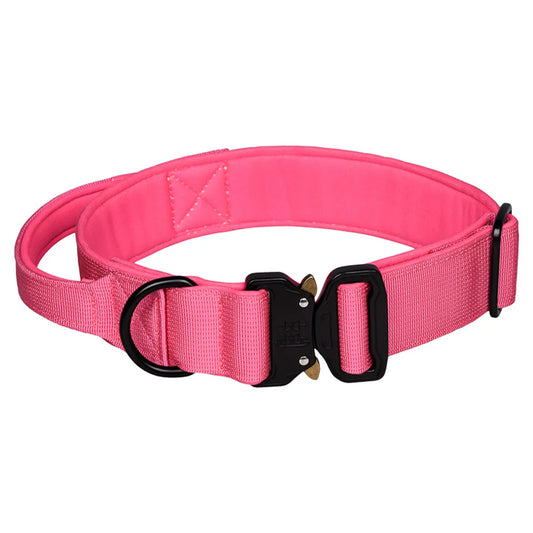 Sale
SaleCute pink dog collar
Regular price £24.99 GBPRegular priceUnit price per£29.99 GBPSale price £24.99 GBPSale -
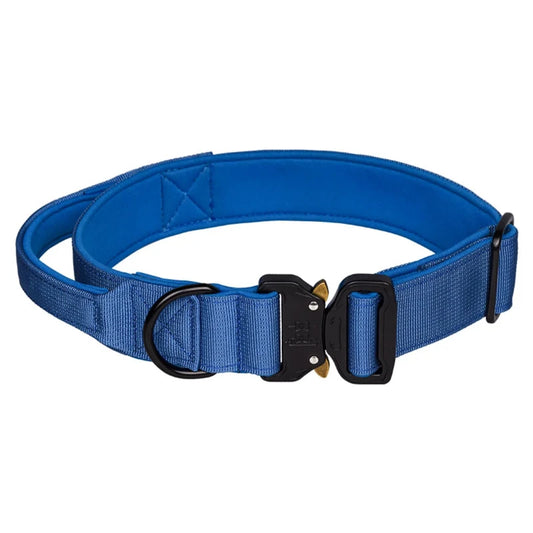 Sale
SaleEasy collar for dogs
Regular price £24.99 GBPRegular priceUnit price per£29.99 GBPSale price £24.99 GBPSale -
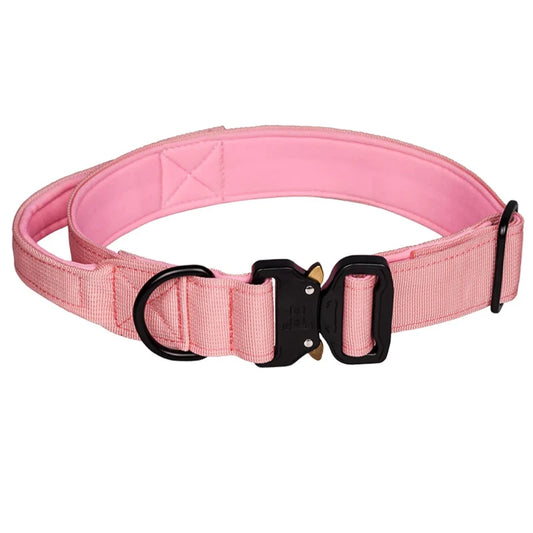 Sale
SalePale pink dog collar
Regular price £24.99 GBPRegular priceUnit price per£29.99 GBPSale price £24.99 GBPSale -
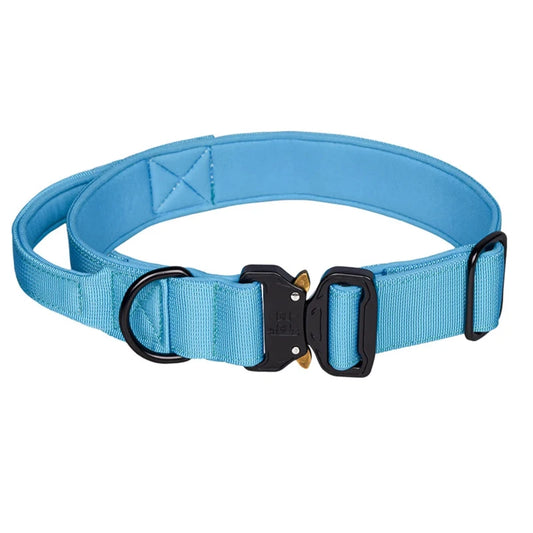 Sale
SaleEasy open collar
Regular price £24.99 GBPRegular priceUnit price per£29.99 GBPSale price £24.99 GBPSale
The main difference with a quick-release dog collar is the buckle.
Instead of undoing a traditional pin buckle, you press the release on the fastening and the collar opens. It is a small change, but if you take your dog's collar on and off regularly, it is one you notice fairly quickly.
There are different materials and designs in this collection, so don't choose on the buckle alone. Neck size, collar width and the amount of adjustment are still worth checking properly.
What Does Quick-Release Actually Mean?
A quick-release collar has a buckle that can be opened by pressing the release points on the fastening.
It should not be confused with a breakaway collar.
A breakaway design is made to separate under particular conditions. A standard quick-release buckle is normally opened by hand. Unless an individual product is specifically described as having a breakaway feature, don't assume that it does.
That distinction is worth knowing before you buy, especially as the two terms sometimes get mixed together.
Nylon or Leather?
The collection can include both nylon and leather styles.
Nylon has more of a fabric appearance and is often used for collars with brighter colours or patterns. Leather gives a more traditional look and can feel firmer when it is new.
The quick-release fastening does not make the materials themselves the same.
If you are deciding between two collars you should look at the complete design. A narrow nylon collar with a small buckle can look quite light, while a broader leather version may be much more substantial.
Check the individual product page for the material used on the collar you are considering.
Quick-Release Doesn't Mean One-Handed
You may see some buckles that are easy to operate with one hand, but that should not be assumed for every collar.
The size and shape of the buckle can make quite a difference.
If that is something you specifically want, look closely at the photographs and written description for the individual product rather than treating it as a standard feature of all quick-release dog collars.
The important thing is knowing which fastening you are actually buying.
Lead Rings and Tags
The buckle tends to get most of the attention. They have a look at the rest of the hardware as well.
Many collars have a D-ring or another attachment point for a lead or tag. Check how that part sits in relation to the buckle and adjustment section.
On a small collar, the hardware can take up quite a bit of room. On a wider design it may hardly stand out at all.
Every so often, take a quick look at the ring, buckle and any stitched sections. You are simply checking for obvious wear or anything that has started to come apart.
Reflective Details on Some Collars
Some designs may also include reflective2 sections.
Check the actual product rather than assuming it is included throughout the collection.
Reflective material becomes more noticeable when light hits it. It is different from a light-up collar, which has its own light source.
During the day, reflective sections can be quite subtle, so look through the additional photographs if they are available.
Keeping the Collar Clean
How you clean a quick-release collar depends mainly on what it is made from.
A nylon collar and a leather one shouldn't automatically be treated in the same way.
Follow the care information for the individual product, particularly if the collar has become wet or muddy.
The buckle itself can collect dirt too. Clean it according to the product instructions and make sure it is working normally before putting the collar back on.
Choosing Between the Quick-Release Collars
Start with the neck measurement. Then look at the width and adjustment range.
After that, compare the buckle itself. Is it fairly small or more substantial? How does it sit against the rest of the collar?
A Few Things You Notice After Using It
Once you have used the collar a few times, you start to notice the little things.
The buckle is one of them. On some collars it sits quite flat against the band. On others it sticks out a bit more. If your dog has a thick coat, that can make a difference when you are trying to find the fastening quickly.
It is also worth looking at how much strap is left after you adjust the collar. Too much spare material can look a bit messy, especially on a small dog. If there is hardly any adjustment left, that is useful to know too.
The width changes the feel of the collar more than you might expect. A narrow one usually looks lighter, while a wider collar can feel much more noticeable even when the buckle itself is small.
After a while, opening and closing the buckle becomes second nature. You stop thinking about it.